
Story – An amalgamation of words intertwined with phraseology and lines, coherently laced with a concoction of resplendent folklore, shimmering in the luminescence of time’s illusion, weaving tales on a translucent veil imperceptible to the naked eye, and echoing the whispers of a bygone era. Impregnated are these narratives, reminiscent of the land’s cultural essence, animated by multifaceted caricatures personifying human behaviour, and imbued with the evocative rasas. Nestled deeply in their metaphorical wombs, lying dormant, they silently wait for an opportune moment to manifest through the exquisite art of storytelling. Birthed are these stories into existence leaving an indelible mark on its readers.
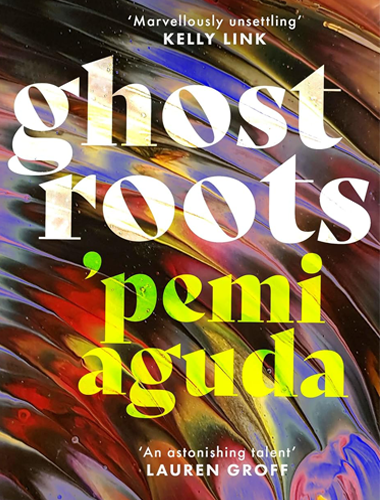
GhostRoots, a debut book by Pemi Aduga is an anthology of short, spellbinding tales wafting through the air like the mystical and elusive zephyr, subtly enticing and invigorating one’s senses, inviting one to experience the intricately crafted characters, navigating the transitional spaces of mundanity and horror, their narratives – the allure of the unfamiliar. Interwoven seamlessly with the languidness of an eerie milieu, the sombre darkness penetrates deeply into the heart of the land, enchanting the reader with its impeccable art of storytelling, captivating enough to compel a reader to finish the book in one sitting.
Centred on women entangled in the uncanniest of circumstances – except for “Things Boys Do”, which revolves around male protagonists – these stories resonate with pain, unravelling a profound, tenebrous gloom that permeates the very fabric of Lagos, as perceived by its inhabitants. The portrayal of horror in these tales is allegorical, embodying stark realities: the tribulations of racial identity, the rigid oppressive hierarchies of class structures, the existential crisis of migrant workers, suffocating societal pressures, the burdens of parental expectations, inter-generational trauma reverberating through families, economic instability, and the colossal weight of personal guilt borne by migrants.
Quintessentially, each story masterfully dissects the conventional themes of suffering and bereavement, illuminating them as manifestations of everyday existence. Stories such as, “Manifest”, “The Hollow”, “Imagine Me Carrying You”, and “The Wonders of the World”, stand out as some of my favourites in this carousel of narratives.
This satisfying read transports the reader into Aguda’s rich and multifaceted imagination—a realm governed by dread, horror, and the hauntingly exquisite beauty of magic, seamlessly intertwining the tangible with the mystical.
Have you read this book?