
What transpires when power does not merely govern, put performs?
The facsimile of authority and domination subjugates the very essence of liberty – freedom of speech, art, and creative expression. It compels one to confront and interrogate a fragile system steeped in debauchery, slander, and political intimidation, designed to usurp, and distort the original voice – the very talent that dares to question the aesthetics and authenticity underpinning what we accept as truth, and ultimately the reality itself. Perhaps reality, as stark as it proclaims itself to be, can never truly be unhinged; for volition stands irrevocably compromised beneath the bared fangs of authoritarian power and belligerence.
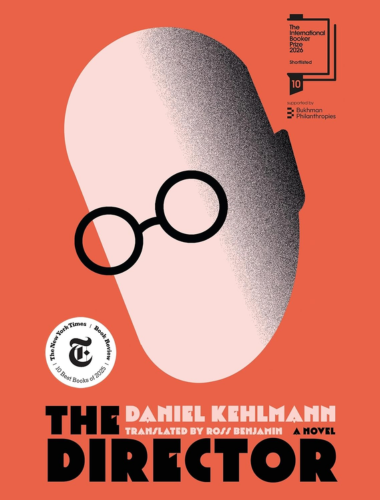
Written with nonchalance, laced with the audacity of imperceptible satirical restraint, and animated by a vivid imagination catalysed by the cruel machinery of Nazi governance, Daniel Kehlmann weaves a fictional narrative inspired by true events that unfolded under the Nazi regime. It traces the life of G.W. Pabst a brilliant filmmaker and creative genius, his family, charting the fraught trajectory of his existence during the dominance of the Nazi dictatorship.
Brilliantly translated by Ross Benjamin, the novel compels the reader to ruminate on the quiet dissection of tyranny and control masquerading as order, unveiling the opacity of a mirror that reflects a visage-one not always easy to endure. It leaves the reader to dwell on thoughts encapsulating the profoundly deceptive: the gradual erosion of the sanctity of freedom of speech, art, and creative dissent – an inevitable truth that delineates the arc of the narrative.
What the book ultimately leaves me questioning is this:
Do we truly possess freedom of speech, art and creative expression, or do we merely exist beneath the illusionary garb of flexibility – where power quietly asserts its dominion?
What, then, delineates the boundaries of right and wrong, of acceptability and rejection, within this system?
Can those who coerce and dominate genuinely posess the calibre or the creative acumen to dictate terms and curate the contours of expression?
Where does the responsibility truly lie, with those who impose control, or with those who, knowingly sustain it?
What is more insidious – the overt brutality of power or its quieter capacity to normalise submission?
Can art retain its authenticity under the vigilant gaze of control, or does it inevitably become an instrument of that very power?
Does the distortion of truth originate externally, or does it first takes root within the psyche of those who choose endurance over resistance?
Can one ever return to authentic self after prolonged proximity to coercive systems, or is that self irrevocably altered?
A must read!
View this post on Instagram