
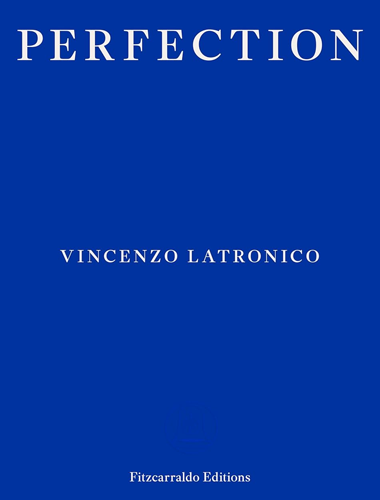
The imperceptible affinity of a cerebral mind, finely attuned to its object of contemplation, remains impervious to the cacophony of external distractions, for it possesses an uncanny, almost mystical capacity for unwavering concentration. This awareness unveils an acute perceptiveness, rendering each detail with exceptional lucidity and precision – an attribute akin to the stillness of meditation. In this elevated state, every object is minutely observed with reverence, delicately analysed, and dissected with grace, as though each fragment elucidates some profound, unfathomable truth – an intricate revelation waiting to be discovered.
Meticulousness lies at the heart of an artist’s perceptive vision, amplifying the plausibility and depth inherent in every facet – from the faintest flicker of thought to a word, a phrase, each crafted with exquisite finesse. Here, precision is not merely a technique but a transcendental act, elevating one’s creation to the point of heightened rapture, a state of near-ecstatic clarity – the ever-elusive ideal of Perfection.
Drawing inspiration from George Perec’s Things: A Story of the Sixties, the author crafts a masterpiece, of prose that distills the restless spirit of a generation, capturing with haunting clarity the pervasive malaise of a society that is both enraptured and ensnared by the glittering mirage of material aspiration. The narrative emerges as a literary artefact, that embodies the existential dissonance of consumer culture, now re-imagined through the lens of post-2015 Berlin, in the lingering shadows of the migration crisis.
The narrative deliberately forsakes the conventional arc of storytelling in favor of an evocative, descriptively immersive mode. The opening passages do not usher in character, dialogue, or conflict; instead, they unfurl – with almost reverential precision – an exhaustive inventory of curated possessions: a meticulously composed catalogue of objects, inspired by and disseminated through Instagram, mirroring the aspirational psyche of the protagonists, Anna and Tom. Freelance digital creatives and self-styled progressives, navigate the porous boundaries of identity, experimenting with sexual fantasies and immersing themselves in Berlin’s ceaseless party scene. Outwardly, they inhabit a world of glossy surfaces carefully constructed and aesthetically immaculate – but beneath that lies an existential void, a shell embalmed in discontent, drifting in a world saturated with aesthetic longing and repetition.
Rendered in opulent and exquisitely crafted prose, the text conjures a world that feels both tangible and illusory – where identity is not innately born but painstakingly curated, revealing an entanglement forged through gentrification and weaved into the very fabric of consumerist desire. Their dissatisfaction, their daydreams of an ideal life in a foreign land, and their eventual disillusionment encapsulate the chaotic arc of consumer fantasy.
The idea of a well-curated home becomes, for Anna and Tom, more than just a sanctuary – it transforms into a symbol, a commodified emblem of desirability.
Their carefully maintained apartment serves as an aesthetic statement and a source of income, to attract short-term sub-letters through its polished allure. At its core, Perfection is a beautiful rendition of the commodification of desire. The protagonists are not merely consumers; they are consumed by the very logic of everyday life. With unflinching clarity, the author captures how material objects become imbued with emotional, even existential significance. These “objects” become the very architecture of the characters’ lives, scaffolding their dreams, frustrations, and ultimately their mental state of equilibrium.
This scenario prompts a deeper question: What does one truly seek in the relentless pursuit of digital approval? Should one surrender to the unceasing churn of the social media rat race, where external validation eclipses the sanctity of inner peace and mental stillness? How far is one willing to go for the fleeting promise of visibility – lost in the illusion of being seen, being heard? And what of plagiarism and imitation, when copycats brazenly emulate not out of inspiration, but from a desperate yearning to be noticed in a world that so often mistakes replication for reverence? Here, the line between authenticity and deceit begins to dissolve, compelling one to ask: is the pursuit of presence truly worth the forfeiture of one’s unique voice?
I’m enthralled by the author’s writing style that’s spectacularly translated by Sophie Hughes, for it’s nothing short of a triumph in literary craftsmanship. The prose is sumptuous, almost decadent, each sentence unfolding with the richness of a well-plated course, revealing savory undertones and subtle textures that linger on the reader’s palate, leaving one with an insatiable hunger for more. Beneath its poised exterior lies a quiet devotion; the tone, cool and measured – almost clinical – only heightens the narrative’s intellectual acuity. The diction is impeccably chosen, each word resonating in synchrony, weaving between expansive, meandering reflections and sudden, incisive declarations. This rhythmic duality forms a kind of narrative – an elegant tension that mirrors the protagonists’ inner dissonance, caught as they are between the numbing ease of bourgeois complacency and an ineffable yearning for rapture, just beyond the threshold of known.
So mesmerized was I by the sheer beauty and the execution of this novel – particularly the quintessential elegance of its prose – that I found myself wholly immersed in its resonance. Only when I felt sufficiently attuned to its emotional undercurrents, that I felt prepared to give shape to my thoughts in the form of a review. There is nothing more sacred or unadulterated than an artist’s creation – one that invites the reader to not only observe but to reminisce, to inhabit, and to relive each thought and word with humility and grace. Such is the writer’s moment of truth – when art transcends the confines of a page and metamorphoses into a shared inner experience.
This work stands as the author’s finest to date, and I confidently envision it securing a place amongst the top three contenders – if not claiming the International Booker Prize 2025 outright. For those who revel in the artistry of syntax and the richness of lexicon, enveloped in the grand opulence of storytelling, this book offers an experience of rare literary delight. A mere 112 pages, its simplicity conceals a potent narrative force – it is a compact, thought-provoking, and unquestionably, a must-read!