
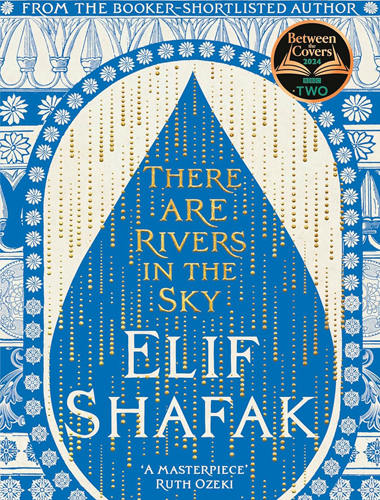
Imagine a minuscule drop of water, also a wish-granting jewel, a harbinger, and an indefatigable custodian of memories, imbued with the coruscating hues of history, deeply and intricately etched into the indelible annals of time, enduring and traversing vast distances to echo a peculiar yet an indomitable tale.
A fictional poetic odyssey, suffused with historical truths, permeates the fabric of time, weaving a tapestry of myriad melancholic emotions, interspersed by the iridescent tumult of kaleidoscopic events, bearing lingering echoes of a bygone era – the ancient majestic city of Nineveh, the erudite King Ashurbanipal and his unwavering devotion to literature, a tyrant whose ruthless reign irrevocably reshaped the course of history. The most profound takeaway from this literary historical fictional work lies in its meticulous detailing of the Yazidi community and its obscured and forgotten cultural legacy which once flourished along the banks of the Tigris River in the shadowed recesses of antiquity.
In hindsight, this ethereal drop of water, a silent witness to the harrowing atrocities perpetrated by the sovereign of Mesopotamia, would eventually with the inexorable march of time, illuminate and unfurl a succession of events in chronological order. By seamlessly entwining the destinies of three protagonists across different timelines, in a surreptitiously meditative and mystical manner, it would irrevocably alter their lives, binding them through an imperceptible yet indissoluble thread – the Epic of Gilamesh discovered in the renowned Library of Ashurbanipal, the then king of Assyria, in the ancient city of Nineveh.
The portrayal of the gifted and ingenious, ‘King Arthur of the Sewers and Slums’ from Victorian London, living a life of destitution, carving his path and becoming deeply intrigued by the revelations unearthed from Ashurbanipal’s grand library by the archaeologists, now proudly displayed in the British Museum, particularly after encountering the book – ‘Nineveh and its Remains’ is rendered with brilliance. I was truly captivated by how his journey would unfold, especially in contrast to the other two protagonists, whose fates remain deeply entwined with the enigmatic verses of the Epic of Gilgamesh and its history.
Elif’s writing is seamless, akin to lyrical prose; it’s evocative and lucid like water. The river emerges as a potent metaphor embodying the quintessence of life, a conduit of energy and a repository of memories that can never be obliterated. It flows unshackled and eternal, transcending the constraints of time, as a silent witness to the ebb and flow of existence.
A paucity of depth in character development is evident in Narin, the Yazidi girl, and Zaleekhah, who resides with her affluent uncle and grapples with depression post her estrangement from her husband. Had these characters been explored to their potential, they could have evoked profound empathy and could have elevated the narrative a notch higher beyond its current stature. While extensive research has been undertaken to construct the historical framework of this fictional work, the absence of structural coherence and cadence reduces the impact, culminating in an inadvertent redundancy of information.
I must say that the engaging storyline renders it a compelling read, and I thoroughly enjoyed every moment of it. A one-time read, but I would wholeheartedly recommend it!
View this post on Instagram