
Nostalgia, unlike serendipity, once awakened, possesses the formidable power to harness inexplicable wrath with conviction when unleashed upon mortals – particularly when the individual’s cognitive faculties fail to concede all factions of division between reality and illusion. It is within the ephemeral now, where timelines blur, that an individual ruminates on instances, seeking emancipation by reliving experiences projected onto the filaments of memory, dissolving and obscuring the thin veil between luminosity and obscurity, past and present – bridging the gap between reason and delirium, until every vestige of existence disintegrates into nothingness.
Credulity is often chastised by those who wield power over the innocent, the intellectuals have mercilessly plundered them – demeaned constantly whenever an opportunity strikes, translating into a subliminal rapture of incongruity and a depravation of fundamental human necessities, for believe do they in the profound abyss of the void, where temporal boundaries dissolve. Can solace not be experienced in the void? What if it is the disintegration of time and events that provide a sense of belonging and reprieve to the individual? By what authority do we impugn the traditional beliefs and behaviours of an unthreatening individual? Are we not governed by prejudices, having completely capitulated to societal conventions? Aren’t we ascending into a prejudiced paradigm against those who derive contentment from their perspectives and beliefs? What, then, constitutes mental illness?
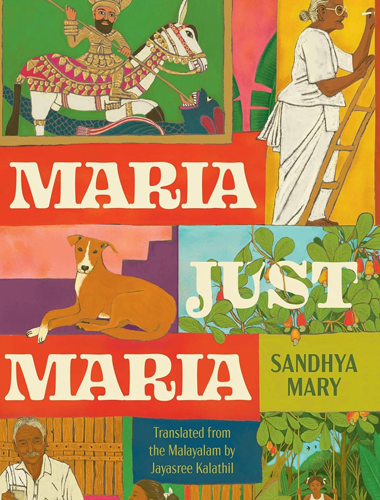
The author intricately weaves a poignant narrative chronicling the formative years of the protagonist, Maria, supplementing it with her unique view of the world. Her credulity is nurtured in the lap of emotional warmth and enveloped by the insurmountable wealth of nature. Her life unfolds at Kottarathil Veedu, an ancestral home imbued with generational legacy and familial lore. Here she is serenaded by the lilting lullabies of ancestry, sung by her beloved maternal grandfather, Geevarghese – her dearest Appachan. Adding to her innate ability is Maria’s uncanny gift to perceive, intuit, and connect with those who have transitioned to the ethereal place – the unknown.
Her profound love for Chandi, her stray pet companion, stands in stark contrast to the unsatisfactory and discordant relationships she shares with her siblings. The disillusionment of her estranged marriage to the so-called love of her life plunges her into a void of melancholic memories of a bygone world brimming with love and beautiful relationships, now irretrievably lost. The evocative tales recounted by her Appachan and the idyllic life she spent at her ancestral home serve as poignant reminders of a life steeped with simplicity, which she cherished the most now eclipsed by the grim reality she faces in within the confines of a mental institution.
Exquisitely translated by Jayasree Kalathil, this book is a literary gem and an essential read, for it explicitly expounds a beautiful story that incisively addresses the stigmas surrounding mental health. I absolutely enjoyed reading this book and would wholeheartedly recommend it to all the readers.