
Entwined in a web of vivid memories, securely ensconced in the deepest repository, leading to one of the pathways embedded in the chasmic, unfathomable labyrinth of our minds, are those precious vignettes, embodying and flexing an innocuous power, encompassing time and space.
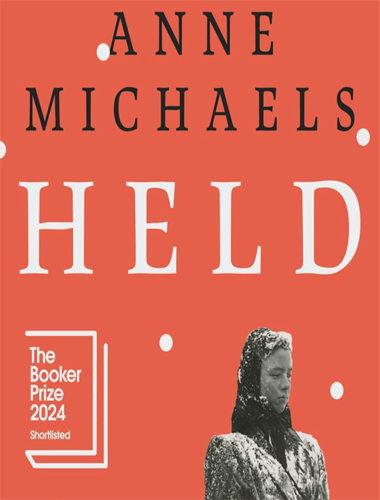
These images, a collage of pictures in motion, transcending the laws of consciousness, are alive and thriving in a mystical parallel dimension, bridging the gap between reality and illusion, like a mirage of luminosity dancing to the rhythm of kaleidoscopic events – visions reflecting the vicissitudes of life transpiring eons ago. A tryst with wordplay, interwoven with poetic flair, bringing to life the transient emotions with seamless intellectual acuity, capturing profound metaphysical questions through cerebral lyrical prose, teetering between the quietude of meditation and deep introspection, forms the essence of Anne Michaels’ latest novel, Held, currently short listed for the booker prize 2024.
Spanning four generations of a family, from early 1900s, the narrative with its intricate pattern and design unfolds the plot, meandering between past and present across generations, the delicate subtleties of human expressions. Embroidered are their lives with vivid evocative colors on a masterfully crafted tapestry – each thread a far cry, a lived caricature shaped by the ravages of the war. The chronicle tracing a journey through the myriad facets of existence – desire, grief, pain, anguish – encapsulating the timeless theme of love lost and found.
The brevity and inscrutability of grief is poignantly captured in these lines “We know life is finite. Why should we believe death lasts forever?” These words resonate deeply, for they explore the paradox of mortality with profound simplicity and elegance. The first six chapters are lucid, gracefully navigating the lives of a family with seamless transitions. However, the narrative takes a disjointed turn with the introduction of new characters – figures like Pierre Currie and Marie Currie – who appear to bear no connection to the main protagonists. This abrupt shift in focus disrupts the continuity, leaving the reader grappling with characters, trying to connect the dots, whose relevance to the core narrative feels redundant and underdeveloped.
I absolutely enjoyed reading this book for its poetic language with deep emotional reflection. Have you read this book?