
Rivers possess a mystical quality, they’re luminescent, free-flowing, an individual entity with its individual properties and powers, sharing their energy – melody or the sound current with those who are attuned to nature’s language. They subliminally in subtle whispers speak of paths traversed: a lyrical odyssey, their rhythm pure and refined, instilling a sense of tranquillity, willingly embracing changes along the way. It’s symbolic, for it allegorically signifies a river’s journey from its source through various expressions – calm, fury, hope, bitterness, joy – and through trials and tribulations, akin to a pilgrimage, until reaching their ultimate confluence.
Each river embodies and shapes a landscape that mirrors its unique personality/essence. It possesses a distinct energy with its internal dynamics that evolve and transform over time. From a metaphysical perspective, nature is inherently spiritual, designed to flow, evolve and empower the beings and entities that exist within and around it. Nature, including humans, is composed of the five elements – earth, water, fire, air and akasha which flow through the cosmos, binding us into a cohesive whole.
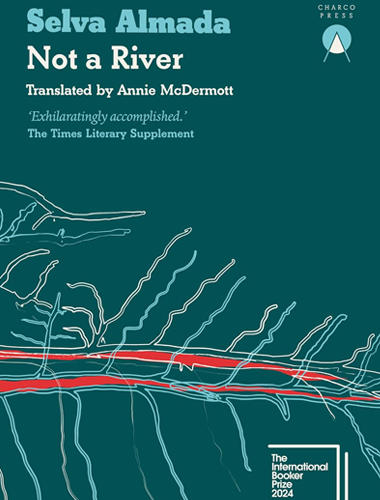
The book ‘Not a River’ originally written by Selma Almada in Spanish and translated into English by Annie McDermott, very poetically encapsulates the story of three protagonists – friends Enero, El Negro and Tilo, the teenage son of their deceased friend Eusebio, who embark on a fishing expedition along a river in a rural village in Argentina, a place steeped with familiarity. Under the scorching sun and after an intense effort, they shoot and capture a massive stingray. They hang their prized possession from a tree attracting locals and seeing the fish decaying, this act of carelessness incites the anger of the locals setting the stage for an inevitable reckoning, especially for the disrespectful, uncouth attitude of the outsiders towards their woods, nature and river which would ultimately pave the way for their retribution.
Like a mirage, the narrative in flux ebbs and flows between timelines, artfully weaving past and present in a vibrant hue – a rich tapestry adorned with vivid motifs, where each thread is drenched with pain, joy and sadness reminiscent of the days gone by and constant reminders of the tragedies that have lingered with them. The story subtly shifts gears with the introduction of two girls, their tales intricately woven to reveal additional layers of complexity that propel the story forward. The writing is profoundly impactful, focusing not merely on the characters’ flaws – misogynistic, toxic masculinity – but delving into the depth and subtlety that branches out toward the metaphysical.
Evolution is the key, it’s fundamental. Just as a river flows, fluid and dynamic, each individual is destined to traverse through specific experiences that foster learning, growth and self-empowerment. These experiences make an individual go through a sequence of human personal revolutions, and through trial and error, they become aware of their flaws and shortcomings. By operating from a higher level of consciousness they initiate transformative changes in their karma and actions, altering the course of their lives in profound ways.
The characters depicted in this book ‘Not a River’ are portrayed with flaws, however, are presented with opportunities to transform their outlook and approach toward life through decisive actions. A pervasive lack of awareness ultimately leads them back to the very river where they experienced a profound loss of their dear friend. This cyclical pattern not only determines their resistance to change but also serves as a reflection on the consequences of their unaltered paths.
The flow of a river mirrors human life, as life is energy, meant to be free-flowing. It’s never meant to be contained – the famous Buddhist saying, “We never step in the same river twice,” speaks about the ever-changing nature of existence where nothing remains static. Change, indeed, is the only constant for they are inextricably connected.
I completed ‘Not a River’ in one sitting, and was thoroughly captivated by the impeccable style of writing. In the translators note, Annie McDermott candidly discusses the difficulties and challenges she faced in translating the text – from colloquial speech, native phrases that vividly transport readers directly to experience the beauty, wilderness, presence of the river where exists a mysterious world characterized by silence, darkness, dreams, and hope. The skillful translation transforms the book into a page turner that immerses readers in its sheer raw beauty. A must read!