
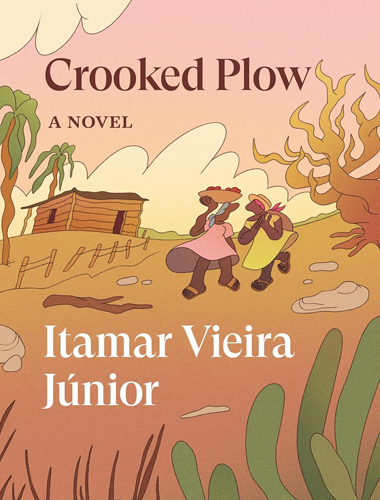
Freedom – a coveted desire, beats fiercely and irrevocably to the rhythm of the human heart, safely cocooned from the watchful eyes of its predators who lurk for an opportune moment to strike and douse this impassioned flame for emancipation, a prerogative of every human irrespective of caste, creed, or colour. The sanctity of life is to be valued, treasured, and not enslaved or imprisoned, for to do so would be a violation of the fundamental laws of nature.
Itamar Vieira Junior succinctly elucidates the plight and struggles of Brazil’s quilombola community in his award-winning historical fictional novel, Crooked Plow. Descendants of enslaved Africans, they were mercilessly traded and brought to work as slaves on plantations that existed in Brazil until its abolition in 1888. This book is a lyrical ode to the resilience and the tireless, unrelenting struggle and determination of the quilombola community. The story revolves around a time when quilombolas were freed, but tainted by economic oppression and marginalization; however, due to a lack of work and education, they resorted to working in plantations for survival.
It vividly demystifies and brings to the fore the myriad hardships that they went through, right from the exploitative practices of tenant farming to poor cultivation practices that ensured they never existed in revenue records. With zero transparency between their landlords, the enslaved community was exposed to hordes of unjust circumstances; they languished in poverty, rendering them to live a life of destitution. They were disparaged and begrudged, forced to live in poor habitats that lacked basic sanitation, leading to diseases and early deaths. As cultivators of the land, they were denied the lawful right to enjoy the fruits of their labour, robbing them of their entitlement and dignity.
The author intricately weaves a rich tapestry of subjugation viewed through the lens of three generations of “Chapeu Grande” family, tenant farmers who ploughed and harvested fields on Peixoto’s property in Bahia state, Agua Negra. He would rarely visit the plantation, but his existence looms large only to remind and, on certain occasions reprimand the community through power dynamics, making it clear that they were forbidden to build brick houses under his rule and that they were loyal tenant farmers who were given work opportunities and settlement for free. The well-nuanced and compelling narrative walks us through a labyrinth of repressed emotions and desires that lay withering, accepting their fate, wailing silently in darkness, somewhere hoping against seemingly insurmountable odds for that glimmer of hope that would be a harbinger of freedom and emancipation for all.
Meet Belonisia and Bibiana, aged 6 and 7, daughters of Zeca Chapeu Grande, a revered spiritual medium whose body serves as a conduit for encantados to treat the illnesses of the people who live in Agua Negra. A spiritual healer, his reputation is unmatched in the community, and his presence commands both respect and awe. The famous adage, “Look before you leap,” sums up the sisters’ curiosity about what lay in their grandma’s suitcase that rested beneath her bed like a secret treasure trove. A knife, shining bright like a diamond, and its blade sharp – a weapon to slice its target. The temptation of the unknown ensnares both these sisters into a painful ordeal, making them want to taste its shine that would change the life of one sister, who severely cuts her tongue, an irrevocable twist of fate altering her life and relationship with her sister forever.
The story gradually unveils to establish the trials and tribulations experienced by the Chapeau family and the community that thrives on the plantation. Just like tributaries that finally converge into a mighty river, the story navigates through the intertwined lives of two sisters, their journey marked by extreme hardships, right from their childhood to adulthood, and eventually falling in love with the same man. He would one day run away with Bibiana, his love, in pursuit of greener pastures, seeking better opportunities and living conditions, and in the future, will become a catalyst of transformation, a beacon of hope in bringing a revolution representing the interests, rights, better living and working conditions of the quilombola community.
This poignant narrative is divided into three parts, with the first two parts articulating the life of the Chapeu family as experienced through the eyes of both sisters. It vividly serves as a tableau, depicting the portrait of misfortune that befalls them amidst the backdrop of perpetual poverty, hardships, and the predicament of a life ridiculed with enslavement and oppression.
In part three – Encantado, the mythical spiritual entity that dwells and thrives amongst the quilombola diaspora, guides us to delve deeper through the angst and torture the land has endured, with its rivers reeking of blood, the soil bearing witness to a legacy of diseases, deaths, and sacrifices resulting from the lack of proper amenities and necessities. It wails in sorrow, culminating as a portent of justice that demands restitution for past wrongs for the peace of the land.
This heart-wrenching tale opens a vista of human experiences for the reader. It makes one question the very foundation of various facets of life: Why enslavement? Should humans be deprived of basic human rights? Where is the sanctity of life for all? Why this oppression of racism? Do the privileged ones have the right to exploit the less fortunate, the underprivileged? Will humanity ever look at others with equality and respect, or will they succumb to the power of authority and privilege?
This book is a masterpiece, and I thoroughly enjoyed reading it. I highly recommend it to everyone. It’s a must-read!”