
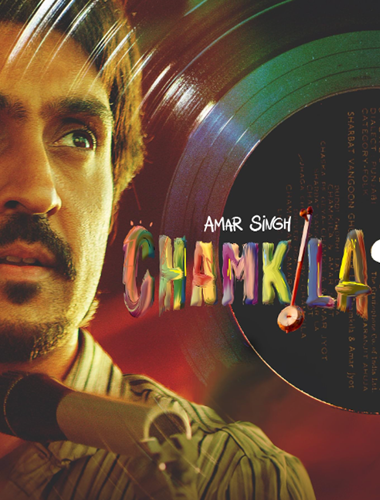
A peculiar sense of familiarity, or ‘déjà vu,’ often permeates the art world, with artists tapping into their subconscious mind – a potent reservoir of infinite memories – as a source of inspiration. It serves as their muse, where dormant feelings, emotions, and desires yearn to be brought to life in various forms such as poetry, songs, music, painting, and writing. Here, freedom of expression reigns supreme, allowing artists to leverage their unique perspectives, views, and opinions in their creations.
The pen is mightier than the sword. Voices that dare to traverse the chasm of silence often find themselves engulfed in a whirlpool of turbulence, where their rights are infringed upon by those who wield dominance and power or are silenced indefinitely in the name of moral policing and cultural norms. This is a persistent issue that demands attention, where the sanctity of an artist’s expression must not be trampled upon. Yet, what do these voices gain? Power and autonomy. However, those who sing against the tide can never truly be silenced, for their echoes resonate through the annals of time, inspiring future generations to tread the untrodden path.
For me, the movie “Chamkila” is a poignant poetic odyssey that delves into the enigmatic life of a lyrical genius whose words stirred emotions and challenged societal norms. Like a finely crafted poem, this cinematic masterpiece vividly portrays Amar Singh Chamkila’s journey—from his humble beginnings to becoming the ‘uncrowned’ king of Punjab’s music in the 1980s. The story skillfully navigates the dichotomy of events that shaped Chamkila’s life: his meteoric rise from obscurity to fame and glory, an overnight sensation whose charisma, songs, and singing style were celebrated by a section of society that worshipped his craft. On the other hand, he was fiercely disparaged and vilified by intellectuals of the time for his crude, vulgar lyrics that objectified women, ultimately leading to his tragic demise.
Why do Chamkila, Amarjot and his two band members get killed? Being a singer and a performer why was he condemned? Despite facing criticism for his art, why was he successful and still loved by the masses? Well, I’m not going to delve into the story because I want you all to watch it and experience it first-hand.
Once again, Imtiaz Ali, with his deft use of visuals and meticulous storytelling, weaves a spectacular fictional biopic. One of the best storytellers in Indian cinema (with “Tamasha” being one of my favourites), his craftsmanship is so refined that it creates an immersive experience for the audience, immediately transporting us into the heart of Punjab, where Chamkila’s words reverberate throughout the masses, painting a vibrant hue of colours and evoking a spectrum of myriad feelings from pain to pleasure, joy to anger. It’s a cinematic journey that paints a vivid portrait of the culture and emotions of that era, beautifully capturing the vibrancy of the 80s.
The musical narrative unfolds gradually, seamlessly and lucidly like a gentle stream merging with a lyrical symphony, revealing Chamkila’s prowess. The masses liken him to “the Elvis of Punjab,” a master wordsmith whose verses effortlessly encapsulate the essence of life’s travails. The movie highlights Chamkila’s unapologetic portrayal of reality, tackling taboo lyrics with raw honesty, much to the chagrin of conservative factions fuelled by hypocrisy. He grows into a polarizing figure, challenging societal norms and incurring the wrath of the powerful.
What are lyrics without music? Nothing but a body without a soul – lifeless and devoid of vitality. Words carry immense weight, conveying deep meaning, yet when these sentiments are expressed and brought to life with just the right kind of music, it creates a perfect recipe to tantalize our senses. The movie “Chamkila” wouldn’t be what we see today without the contribution of our music maestro, the quintessential A.R. Rahman, whose Midas touch infuses authenticity into every note. The musical landscape crafted by A.R. Rahman effortlessly transports us to the lush greenery of sesame fields, where the laughter of women, children, and men blends harmoniously with rhythmic beats, creating an immersive experience for the senses. Just the other day, I was listening to Mozart’s Requiem, which stands as a testament to the brilliance of his musical talent. I take immense pride in mentioning that A.R. Rahman’s music is among the few that come close to the legendary, prolific, and influential music composers, for his work carries the same sheer brilliance, richness, and innovation that immediately strikes a chord with the listener, making him a true icon in the realm of contemporary music in India today.
A movie truly succeeds when actors step out of their comfort zones to fully inhabit the characters they portray, wearing the garb of an entity that existed once upon a time, embodying their essence through mannerisms, voice modulation and body language. Diljit Dosanjh beautifully nailed Amar Singh Chamkila’s character with perfect ease, blending effortlessly to reprise Chamkila, an iconic figure with great finesse. He has essayed this role so convincingly that it’s hard to imagine anyone else taking on this role. What a stellar performance! This is undoubtedly his best performance to date.
Parineeti Chopra’s portrayal of Amarjot Kaur left me speechless. It’s not every day that we see actors fully commit to transforming themselves for a role – putting on weight, altering mannerisms, and even adapting their singing style to embody a character. Parineeti’s portrayal is nothing short of flawless; she seamlessly becomes Amarjot, delivering a performance with subtle nuances and showcasing pitch-perfect singing. Her acting prowess exudes confidence and grace, capturing the essence of Amarjot’s character with great élan.
Kudos to the entire team for their shared commitment to realizing and staying true to the director’s vision in bringing the story of Chamkila to life on screen.